


Eight books, seven of them various kinds of great (I have ambitions of becoming Mrs Gooch), and one absolute dud stalled out on the starting grid. Please let me know if you can recommend a really good F1 novel.

Murder Like Clockwork by Nicola Whyte is a clever, atmospheric, and thoroughly enjoyable mystery with a wonderfully intriguing hook: Audrey Brooks finds a dead body in an elegant London mansion, runs for help, and when the police arrive… the body is gone. No blood. No obvious evidence. Just one beautiful clock running four minutes slow.
Honestly, that is the kind of mystery setup that immediately makes you sit up straighter.
Audrey is such an appealing amateur sleuth. She is practical, observant, and determined, even when everyone else seems ready to dismiss what she saw. Her work cleaning the Petrov house gives the story a fantastic sense of routine before everything goes spectacularly wrong. The mansion itself, filled with antiques and carefully wound clocks, makes the perfect setting for a mystery that feels precise, elegant, and just a little eerie.
The missing body adds such a fun layer to the case. This is not only a whodunnit, but also a where-is-the-body and how-on-earth-did-that-happen puzzle. The clock running four minutes slow is a brilliant detail because it turns the whole mystery into something wonderfully mechanical and suspicious. Suddenly, every room, every object, and every tick of time feels like it might matter.
Audrey and Lewis make a great detective duo. Their dynamic brings humour and energy to the story, especially because Lewis is just annoying enough to be entertaining. They are not complete beginners after the events of 10 Marchfield Square, but Murder Like Clockwork still stands firmly on its own. I had not read the previous book in the series, and I never felt lost. Instead, it made me want to go back and listen to 10 Marchfield Square too, which is always a good sign.
Nicola Whyte balances cosy mystery charm with darker intrigue really well. The book has a strong sense of place, a satisfyingly unusual crime, and enough twists to keep the investigation ticking along nicely. There is something very enjoyable about a mystery where the smallest details matter, especially when the police are convinced there is no murder and the amateur sleuths know better.
Murder Like Clockwork is a smart, engaging, and entertaining listen for readers who enjoy amateur detectives, locked-room-style puzzles, elegant old houses, missing bodies, and mysteries with a touch of wit.
Charming, twisty, and beautifully timed, this is a mystery that proves some secrets do not stay buried, even when the body disappears.
The Last Book Club by Joanne Rock is a wonderfully twisty, bookish mystery with the kind of premise that feels tailor-made for readers who love secrets, suspicion, and a book club where the discussion is definitely not limited to the monthly pick.
Jordyn is new to Saratoga Springs, and on the surface, being invited to a neighbourhood book club sounds like the perfect way to settle in. New town, new faces, maybe a few snacks, probably some strong opinions about fictional characters. Lovely, right?
Except Jordyn is not there to make friends. She is there for answers.
Her foster sister was once part of this same tight-knit group before she was killed in a hit-and-run after a meeting, and Jordyn is convinced the truth is hidden somewhere among the book club members. That gives the story such a satisfying edge, because every polite conversation, every shared memory, and every cosy gathering feels loaded with possibility. Everyone has something to say, but the real fun is working out what they are not saying.
The book club setting is a brilliant backdrop for a mystery. There is something delicious about a group of readers dissecting stories while their own lives are full of motives, secrets, and suspicious little gaps. When the club hosts a murder mystery party, the line between game and reality starts to blur, and the tension ramps up beautifully. It is clever, playful, and just sinister enough to keep you hooked.
Jordyn makes a strong lead because her grief and determination give the investigation real emotional weight. She is not simply curious; she is driven by love, loss, and the need to understand what really happened. That personal connection makes the mystery feel more urgent, while the twists and reveals keep the story moving at a great pace.
The Last Book Club is perfect for readers who enjoy bookish mysteries, neighbourhood secrets, revenge-driven investigations, and stories where every character might be hiding a motive between the lines. It has the cosy appeal of a book club setting, but with sharper stakes and plenty of suspense bubbling underneath.
Smart, entertaining, and full of tantalising secrets, The Last Book Club is a page-turning reminder that some book clubs discuss murder… and some may be covering one up.


The Devil and Mrs. Gooch by Oliver Darkshire is a gloriously odd, delightfully witty fantasy romp through a city where the hotels are undead, the sorcerers are lazy, and the house spirits are apparently doing the unpaid labour that keeps civilisation from collapsing. Honestly, Verdigris sounds stressful, but I would absolutely visit for the chaos.
I had not read the previous book in the series, but this did not feel like a problem at all. The story stands on its own, dropping the reader into its strange, storm-drenched world with enough confidence and charm that it is easy to go along for the ride. And what a ride it is: crumbling buildings, kidnapped hobs, magical household lore, and a villain with a property development scheme so diabolical it feels uncomfortably believable.
Mrs Gooch is, frankly, a treat. She is ambitious, ruthless, theatrical, and alarmingly practical — the kind of villain who does not simply cackle in the shadows, but has spreadsheets, branding, and a deeply cursed business plan. Her jackbooted approach to villainy is so sharply drawn that she becomes one of the most entertaining parts of the book. Is she terrible? Yes. Is she also kind of the perfect villain role model? Also yes. Goals, but make them morally disastrous.
The worldbuilding is wonderfully playful. The idea of hobs as many-legged house spirits responsible for keeping homes in order is both funny and strangely charming, and the consequences of their disappearance give the story a clever magical logic. Verdigris feels like a place built from folklore, bureaucracy, bad weather, and excellent nonsense.
Professor Green and Mrs Bobkins bring their own peculiar energy to the story, especially with the Household Gramarye at the centre of the chaos. There is a lovely sense that everyone is slightly out of their depth, but in a very determined, very British, “well, best get on with it” kind of way.
The Devil and Mrs. Gooch is fun, clever, eccentric, and packed with personality. It is perfect for readers who enjoy comic fantasy, strange cities, magical domestic mayhem, and villains who steal every scene they stomp into.
Inventive, charming, and wonderfully ridiculous in the best possible way, this is a book with teeth, tea, and truly excellent villainy.
Elizabeth II: In Private. In Public. The Inside Story. by Robert Hardman is a fascinating, warm, and deeply engaging portrait of one of the most memorable monarchs of our time.
What makes this book so compelling is the way it looks beyond the familiar public image of Queen Elizabeth II. We all know the photographs, the speeches, the formal occasions, and the remarkable decades of service. But Hardman offers something more intimate: a behind-the-scenes look at the woman who lived both an extraordinarily public life and a carefully guarded private one.
The result is a biography that feels both authoritative and personal. Elizabeth II emerges not only as a sovereign, but as a daughter, wife, mother, grandmother, leader, and global figure who carried immense responsibility with grace and restraint. Her life was shaped by duty, but this book also highlights the humour, family devotion, quiet complexity, and emotional discipline behind the crown.
I especially enjoyed the sense of access and detail. Hardman’s experience as a royal commentator and biographer gives the book real depth, and the fresh insights help bring Elizabeth II to life in a way that feels vivid rather than distant. It is interesting to see how she balanced tradition with change, formality with warmth, and immense public expectation with personal loyalty.
The book is also highly readable. It has the sweep of history, but it never feels dry. There is drama, sadness, humour, conflict, and tenderness throughout, making it feel less like a formal record and more like a thoughtful exploration of a remarkable life.
For anyone interested in royal history, modern monarchy, British public life, or simply the human story behind an iconic figure, Elizabeth II: In Private. In Public. The Inside Story. is a rewarding read.
Insightful, respectful, and wonderfully absorbing, it offers a memorable look at the private and public worlds of a Queen who remains one of history’s most recognisable and enduring figures.

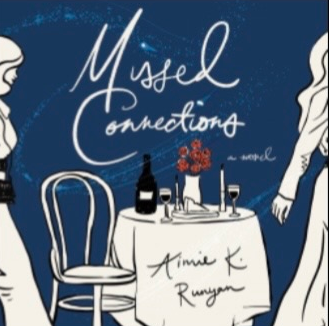
Missed Connections by Aimie K. Runyan is a warm, thoughtful, and wonderfully satisfying novel about ambition, regret, family expectations, and the big, scary question we all occasionally ask ourselves: What if I chose wrong?
Sabrina Sorensen is thirty-seven, newly unemployed, and facing the kind of family gathering that should probably come with a warning label. After losing her dream-adjacent job at a posh Parisian restaurant, she returns home to California for her younger sister’s engagement party, only to be met with the usual chorus of opinions about her life choices. To her family, Sabrina looks restless, non-committal, and impossible to pin down. What they do not realise is that every move she has made has been part of a long, carefully hidden plan: to become a Michelin inspector.
That hidden ambition gives Sabrina such a compelling emotional core. She has sacrificed stability, relationships, and certainty for a dream that no one around her fully understands. So when everything starts to wobble, her doubts feel incredibly real. Has she been brave, or has she been running? Has she built a life with purpose, or has she missed the life she was meant to have?
The airport setup is a brilliant turning point. Sabrina has nowhere to go, yet somehow finds herself offered the chance to revisit the choices that shaped her. It is a charming, slightly magical premise, but the emotions are grounded and relatable. Each revisit forces her to look at herself more honestly, not just through the lens of career success, but through love, family, identity, and the price of chasing a dream.
The food and restaurant world adds so much flavour to the story. Sabrina’s passion for fine dining, her Michelin ambitions, and the spark with an aspiring Danish chef make the novel feel rich, sensory, and full of possibility. It is romantic without being fluffy, reflective without being heavy, and hopeful without pretending that life is simple.
Missed Connections is perfect for readers who enjoy stories about second chances, complicated families, career dreams, travel, food, and the roads not taken. It has heart, charm, and that lovely “maybe it’s not too late” feeling that makes a book linger after the final page.
Tender, clever, and uplifting, Missed Connections is a beautiful reminder that even our detours can lead us exactly where we need to be.
Escape From Holland: The Dash for the Last British Boat Out of Holland in May 1940 by Chris Hunt is a gripping, vivid, and brilliantly researched true story that brings one extraordinary weekend of the Second World War roaring to life.
Set over the tense days following the German invasion of Holland in May 1940, the book has the pace of a thriller but the depth and fascination of history done properly. What makes it so compelling is the unusual mix of people caught up in the chaos: former international footballer Billy Marsden, Margot Fonteyn and the Sadler’s Wells Ballet Company, journalists David Woodward and Margaret Rupli, young diplomat Peers Carter, British football coaches, and even three million pounds’ worth of diamonds. It sounds almost too cinematic to be true — and yet that is exactly what makes it so absorbing.
Chris Hunt does a fantastic job of showing how quickly ordinary plans and professional lives were overturned by war. One moment people are watching dogfights from hotel rooftops, trying to file news reports, managing diplomatic responsibilities, or simply living in Holland; the next, they are part of a desperate race to escape before it is too late. The sense of urgency builds beautifully, especially because the story is anchored in real people with very different reasons to be afraid, brave, confused, and determined.
Billy Marsden’s story is especially striking. The irony of his situation — having once been saved by Germans in a Berlin hospital after a devastating football injury, only to find himself endangered by the German invasion exactly ten years later — adds a powerful human thread to the book. It is these personal details that make the wider historical moment feel immediate and alive.
The inclusion of journalism, ballet, football, diplomacy, and wartime evacuation gives the book a wonderfully layered feel. It is not just a military history account; it is a story about people from different worlds colliding under pressure. Margaret Rupli’s role as one of the rare women reporting on the war for American radio is another fascinating element, adding to the sense that this was a moment where history was being witnessed, recorded, and survived all at once.
Escape From Holland is ideal for readers who enjoy true wartime stories with strong pacing, unusual characters, and a real sense of place. It is informative without feeling dry, dramatic without feeling exaggerated, and deeply human throughout.
Thrilling, moving, and surprisingly cinematic, this is a remarkable account of courage, chance, and the scramble for survival as the last British boat out of Holland prepared to leave.


Handsome by Ezra Palmer is a beautifully written, quietly devastating novel with a premise that is both simple and unforgettable: Evvie Kurtz remembers everything, and Evvie Kurtz has Alzheimer’s disease.
Told in Evvie’s own voice, the book has an intimacy that pulls you in immediately. We move through her life as she remembers it: growing up on Manhattan’s Upper East Side, navigating the world as a scholarship girl in an elite school, building a career as a journalist, falling in love, marrying, staying, enduring, and eventually making the painful decision to leave. It feels personal, reflective, and deeply human.
What makes Handsome so powerful is the tension between memory and loss. Evvie’s story matters because she is telling it while she still can. That awareness gives the novel a tender urgency. Every remembered detail feels precious, not because it is dramatic, but because it belongs to her. Her voice is sharp, honest, sometimes funny, sometimes wounded, and always compelling.
Ezra Palmer handles Evvie’s life with sensitivity and nuance. This is not only a story about illness; it is a story about identity, marriage, ambition, class, love, disappointment, and the complicated choices that shape a life. Evvie’s relationship with her husband is especially layered, capturing the way love can exist alongside frustration, loyalty, hurt, and the need for freedom.
The line “Evvie will forget her story. You will not.” perfectly captures the emotional weight of the novel. By the end, Evvie feels vivid and real — someone whose memories, decisions, and voice linger long after the final page.
Handsome is moving, elegant, and memorable. It is a thoughtful choice for readers who appreciate character-driven fiction, reflective life stories, and novels that explore memory with grace and emotional honesty. A tender, beautifully affecting read.
As an F1 fan, I went into Lights Out by Aven Ellis hoping racing romantasy might be a fun new lane to explore. High-speed glamour, forbidden romance, paddock drama, media tension, maybe a little helmet-hair emotional chaos — sounds promising, right?
Unfortunately, this was not it.
At over 10 hours, Lights Out felt painfully long for a story that never quite found its engine. Instead of the high-stakes racing world I was hoping for, the book spent far too much time on food, fashion, coffee, outfits, and tiny lifestyle details that did very little to move the plot forward. I do not mind atmosphere, but when I am listening to a supposed Formula 1 romance and find myself repeatedly thinking, “Why are we still talking about this latte?”, something has gone wrong in the pit strategy.
The central romance also did not work for me. The setup has potential: a sports journalist who knows better than to get involved with a private, media-hating F1 driver. There is built-in tension there. Her career could be at risk, his guarded public image could complicate everything, and the relationship should feel dangerous, messy, and exciting. Instead, the chemistry felt forced, and many of the romantic scenes landed as awkward rather than swoony. The intimate moments were not especially explicit, but even the build-up felt cringe enough that I found myself needing a mental palate cleanser.
The writing was another stumbling block. It often felt repetitive and overly focused on surface-level details, while the racing backdrop never came alive in a satisfying way. For a book set in a world as dramatic, technical, political, and adrenaline-fuelled as Formula 1, there was surprisingly little that captured the thrill of the sport. I wanted speed, strategy, rivalries, pressure, media chaos, paddock politics — something with bite. Instead, the racing felt more like set dressing for a romance that already was not working for me.
And then there was the audiobook narration. Sadly, it made the experience worse rather than better. A narrator can elevate even a weaker book, but here the performance grated enough that it became part of the struggle. By the halfway mark, I was genuinely considering increasing the speed just to get through it. By the end, I was finishing out of stubbornness rather than enjoyment.
Romance is not my favourite genre, but I am absolutely open to being charmed. Plenty of romantic stories have made me smile, and I recently gave Spies, Lies, & Alibis four stars because it was fun, lively, and had chemistry that worked. Lights Out, however, did not deliver that spark. It had the ingredients for a slick, fast-paced sports romance, but the execution felt slow, shallow, and surprisingly tedious.
Maybe there is a better racing romance out there. I hope there is, because the concept still has potential. But for me, Lights Out was a one-star listen — and only because zero stars felt a little too brutal.
A promising premise, a painful execution, and 10+ hours I would very much like the FIA to investigate.


0 Comments